
OCULUS Optikgeraete GmbH (Germany)
Diagnostic technology
Tear Film Analyzer
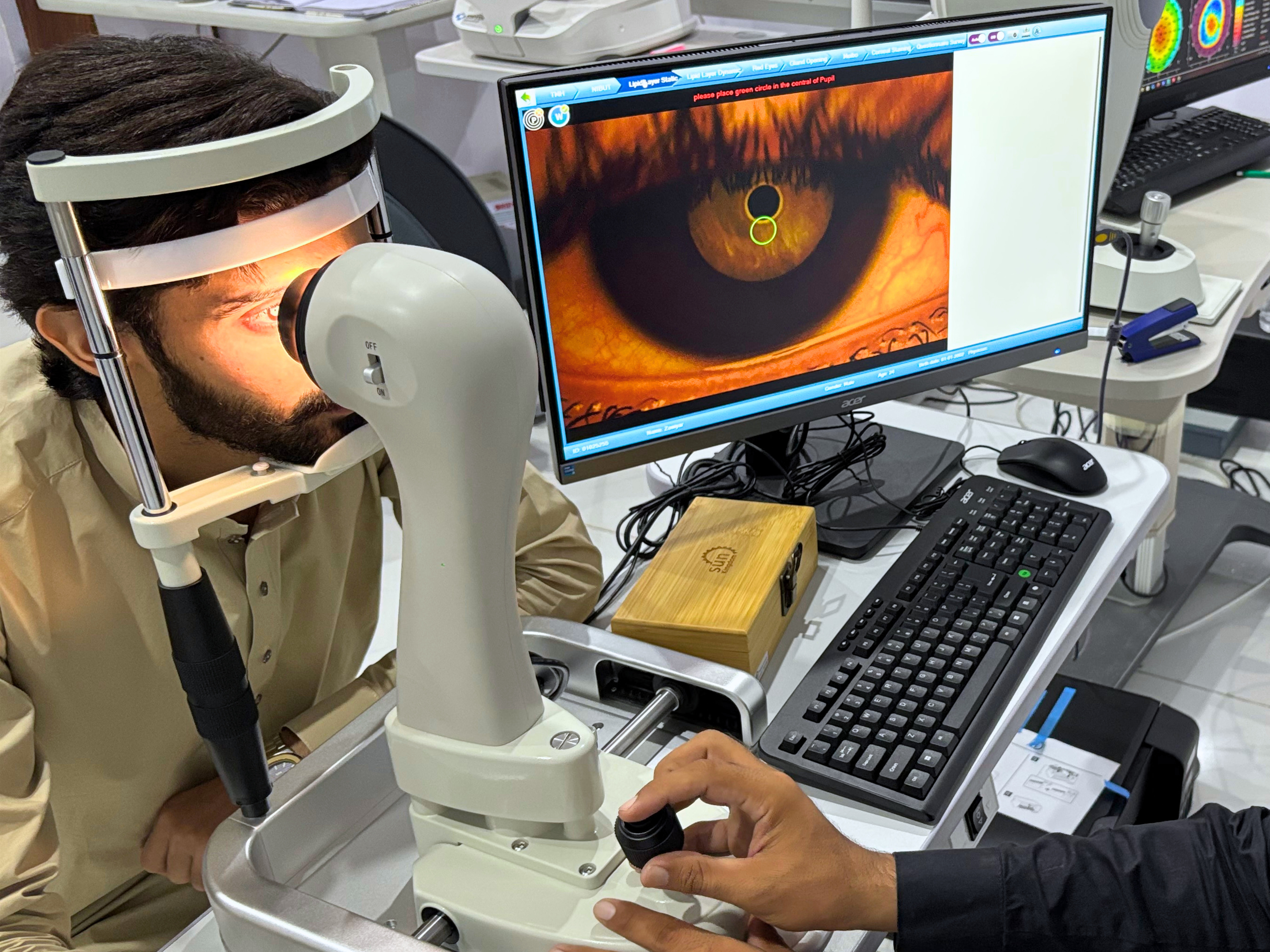
Advanced non-invasive tear film and dry eye diagnostic platform — measures NIBUT, Meibomian gland morphology, tear meniscus height, and lipid layer for complete dry eye profiling.
Overview
How it works
The OCULUS Keratograph 5M is an advanced, non-invasive dry eye diagnostic system used at Peshawar Eye Hospital to assess tear film quality and Meibomian gland health. It helps accurately diagnose different types of dry eye, guides targeted treatment, and ensures patients have a healthy tear film before undergoing LASIK or SMILE surgery. The device also provides automatic redness analysis and detailed reports for better patient education and clinical decision-making.
Key benefits
- Non-invasive NIBUT measurement — Patient friendly, Flourescin free analysis
- Meibography with infrared illumination visualises Meibomian gland structure and disfunction
- Distinguishes aqueous deficiency from evaporative dry eye for targeted treatment
- Critical pre-operative safety check before LASIK or SMILE laser correction
- Crystal TEAR Report generates a structured dry eye summary for patient education
- Automatic conjunctival redness classification (R-Scan) for objective inflammation grading
- Completely non-contact
- Painless
What we use it for
- Diagnosing Dry Eyes — Non-invasive measurement of tear film break-up time (NIBUT), tear meniscus height, lipid layer grading, and Meibomian gland meibography provides a complete, objective dry eye profile without any dyes or contact with the eye.
- Pre-Operative Refractive Surgery Screening — Tear film adequacy is a critical safety requirement before LASIK or SMILE. The Keratograph 5M confirms that tear film stability and Meibomian gland function meet the minimum threshold required before proceeding with laser surgery.
- Contact Lens Intolerance Assessment — Objective tear film and ocular surface measurements identify the specific subtype of dry eye — aqueous deficient, evaporative, or mixed — underlying contact lens discomfort and guide appropriate clinical management.
- Assesing symptomatic eyes — Find the cause of eye irritation, burning, watering, or fluctuating vision